
Hey there! Finding nutrient dense meals easy you can make yourself? I’m here to show you how to effortlessly incorporate nutrient-dense meals into your daily routine. With a little bit of planning and some delicious recipes, you’ll be enjoying quick and nutritious meals in no time. So, let’s dive in and discover the wonders of healthy meal planning!
Key Takeaways – Nutrient Dense Meals Easy
- By following simple strategies, you can easily incorporate nutrient-dense meals into your daily routine.
- Start your day with easy breakfast ideas like scrambled eggs with homemade kale and LSA pesto or a superfood smoothie packed with leafy greens, fruits, and protein.
- For a wholesome lunch, try options like a Japanese noodle salad or a gluten-free risotto loaded with protein-rich hazelnuts and mushrooms.
- Explore flavorful dinner recipes like pan-fried whiting with sweet, earthy kale or baked sweet potatoes topped with chipotle butter and pico de gallo.
- Add a variety of nutrient-dense ingredients to your salads, such as kale, spinach, and zucchini flowers, and drizzle with a homemade olive oil-based dressing.
Now that you know the basics of nutrient-dense meals, it’s time to put them into action. With these effortless nutrient-rich recipes and smart choices, you’ll fuel your body with the essential nutrients it needs. Remember, it’s all about variety, balance, and hydration for optimal nutrient density. So, let’s get cooking and start enjoying the incredible benefits of nutrient-dense meals today!
Easy Breakfast Ideas
Starting your day with a nutrient-dense breakfast sets the tone for the rest of the day. It’s important to choose easy meal prep ideas and convenient healthy recipes that are also packed with essential nutrients. Here are some simple and delicious breakfast options:
Scrambled Eggs with Homemade Kale and LSA Pesto
This recipe combines protein-rich scrambled eggs with the goodness of kale and a homemade LSA pesto. LSA stands for ground linseed (flaxseed), sunflower seeds, and almonds. This nutrient-packed meal provides a balance of protein, healthy fats, and vitamins.
Superfood Smoothie
A superfood smoothie is a quick and easy way to get a variety of nutrients in one glass. Combine leafy greens like spinach or kale with fruits like berries or bananas, add a scoop of protein powder, and blend with your choice of liquid like almond milk or coconut water.
These easy breakfast ideas require minimal prep time and provide a healthy start to your day. Incorporating nutrient-dense ingredients into your morning routine can help boost your energy levels and keep you on track with your health goals.
Table: Nutrient Comparison of Easy Breakfast Ideas
| Breakfast Idea | Protein Content | Fiber Content | Key Nutrients |
|---|---|---|---|
| Scrambled Eggs with Homemade Kale and LSA Pesto | 15g | 4g | Vitamin A, Vitamin K, Vitamin C, Iron, Calcium |
| Superfood Smoothie | 10g | 6g | Vitamin C, Vitamin K, Vitamin E, Fiber |
Note: The nutrient values provided are approximate and can vary based on specific ingredients used in the recipes.
By incorporating these nutrient-packed breakfast ideas into your routine, you can ensure that you start your day with a healthy, convenient, and delicious meal.
Wholesome Lunch Options
When it comes to maintaining a healthy lifestyle, finding fast and healthy meal ideas is essential. Lunchtime is an opportunity to refuel your body with nutritious foods that will keep you energized throughout the day. Here are some time-saving, wholesome lunch options that are both delicious and packed with essential nutrients.
Japanese Noodle Salad
One great option is a Japanese noodle salad. This dish combines flavorful ingredients like soba noodles, edamame beans, carrots, and cucumbers, drizzled with a tangy sesame dressing. Not only is it quick to prepare, but it also provides a good source of protein, fiber, and vitamins.
Gluten-Free Hazelnut and Mushroom Risotto
If you’re looking for a heartier lunch option, try a gluten-free hazelnut and mushroom risotto. This dish is packed with protein-rich hazelnuts and savory mushrooms, creating a delicious and satisfying meal. Plus, it can be prepared in advance and reheated for a quick and convenient lunch.
Table: Nutritional Comparison of Japanese Noodle Salad and Gluten-Free Hazelnut and Mushroom Risotto
| Japanese Noodle Salad | Gluten-Free Hazelnut and Mushroom Risotto | |
|---|---|---|
| Calories | 350 | 450 |
| Protein (g) | 15 | 12 |
| Fiber (g) | 5 | 8 |
| Vitamin C (mg) | 25 | 10 |
| Iron (mg) | 3 | 4 |
Both these lunch options provide a good balance of macronutrients and essential vitamins. However, the Japanese noodle salad is lower in calories and higher in vitamin C, while the gluten-free risotto offers a slightly higher protein content and more fiber. Consider your personal dietary needs and preferences when choosing the best lunch option for you.
Incorporate these fast and healthy meal ideas into your lunchtime routine to ensure you’re getting the nutrients you need while saving time in the kitchen. Remember to prioritize variety and balance in your meals to ensure you’re getting a wide range of essential nutrients throughout the day.
Flavorful Dinner Recipes
When it comes to dinner, I believe that healthy eating should never be boring or bland. That’s why I’ve gathered some of my favorite easy and healthy dinner options that are packed with nutrients and bursting with flavor. Here are a few recipes that will make your taste buds dance while still providing you with all the essential nutrients your body needs.
1. Pan-fried Whiting with Sweet Kale
This delicious dinner recipe combines the delicate flavors of pan-fried whiting with the natural sweetness of kale. Whiting, a light and flaky white fish, is high in protein and low in calories. To prepare this dish, simply season the whiting fillets with salt, pepper, and a squeeze of lemon juice. Then, pan-fry them in a little olive oil until they are golden brown and crispy. Serve the whiting on a bed of sautéed kale, which is rich in vitamins A, C, and K, as well as fiber. The combination of flavors is truly satisfying and will leave you feeling nourished and satisfied.
2. Baked Sweet Potatoes with Chipotle Butter and Pico de Gallo
If you’re looking for a hearty and nutritious dinner option, these baked sweet potatoes are just what you need. Sweet potatoes are a great source of vitamins A and C, as well as fiber. To make this dish, simply bake the sweet potatoes until they are soft and tender. While they are baking, prepare a delicious chipotle butter by mixing softened butter with chopped chipotle peppers in adobo sauce. Once the sweet potatoes are ready, top them with the chipotle butter and a fresh pico de gallo made with diced tomatoes, onions, cilantro, and lime juice. The combination of smoky, spicy, and tangy flavors is absolutely divine.
With these easy healthy dinner options, you can enjoy flavorful meals that are nutrient-dense and satisfying. Whether you’re a fan of fish or prefer a vegetarian option like baked sweet potatoes, these recipes will help you make dinner time an enjoyable and nutritious experience.
| Dish | Main Ingredients | Nutrients |
|---|---|---|
| Pan-fried Whiting with Sweet Kale | Whiting fillets, kale, olive oil | Protein, vitamins A, C, and K, fiber |
| Baked Sweet Potatoes with Chipotle Butter and Pico de Gallo | Sweet potatoes, butter, chipotle peppers, tomatoes, onions, cilantro, lime juice | Vitamins A and C, fiber |
Nutrient-Dense Salads
Soups and smoothies are not the only healthy options for incorporating nutrient-dense ingredients into your meals. Salads can be a delicious and satisfying way to fuel your body with essential vitamins and minerals. By choosing nutrient-rich greens and toppings, you can easily create a salad that is both nutritious and flavorful.
When it comes to building a nutrient-dense salad, start with a base of leafy greens like kale, spinach, or mixed greens. These greens are packed with vitamins A, C, K, and folate, as well as minerals like iron and calcium. To add more variety and nutritional value, consider adding other vegetables like bell peppers, carrots, cucumbers, and cherry tomatoes. These colorful additions provide additional vitamins, minerals, and antioxidants.
To boost the protein content of your salad, include lean sources like grilled chicken, salmon, tofu, or chickpeas. These protein-rich options provide essential amino acids for muscle repair and growth. Additionally, adding a source of healthy fats like avocado, nuts, or seeds can help enhance the absorption of fat-soluble vitamins and keep you feeling satisfied.
| Salad Ingredients | Nutritional Benefits |
|---|---|
| Kale | High in vitamins A, C, K, and folate |
| Spinach | Rich in iron, calcium, and vitamins A and C |
| Bell Peppers | Packed with vitamin C and antioxidants |
| Carrots | Excellent source of vitamin A and fiber |
| Grilled Chicken | Provides lean protein for muscle repair |
Complete your nutrient-dense salad with a homemade olive oil-based dressing. Olive oil is a heart-healthy fat that contains antioxidants and anti-inflammatory properties. Combine it with lemon juice or vinegar to add tanginess and enhance the flavors of your salad. Avoid store-bought dressings that may contain added sugars and unhealthy fats.
Remember, the key to a nutrient-dense salad is to include a variety of colorful ingredients that provide a range of vitamins, minerals, and antioxidants. Experiment with different combinations to keep your salads exciting and enjoyable. With nutrient-dense salads as part of your healthy meal planning, you’ll nourish your body and support overall well-being.
Snack Smart
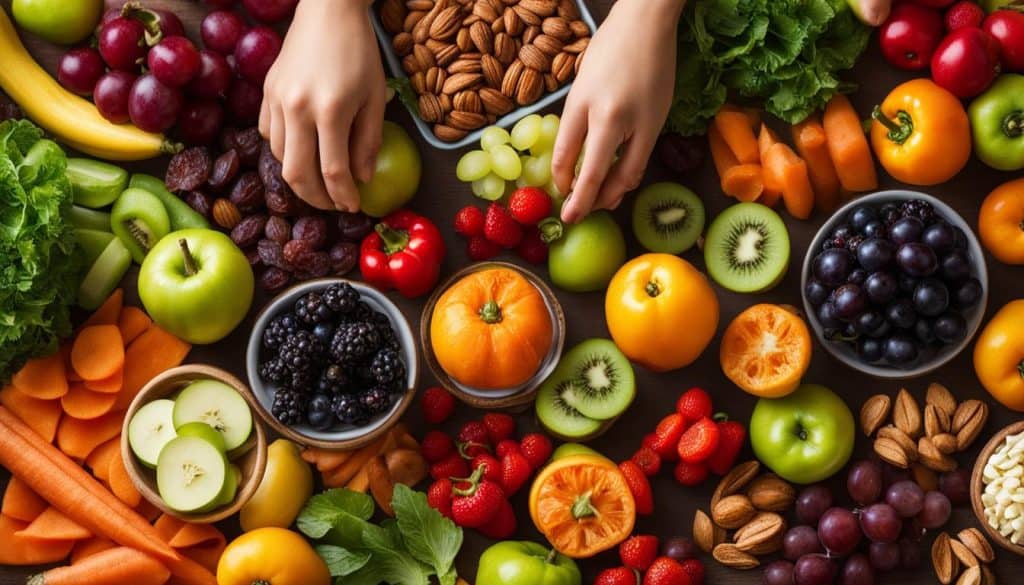
When it comes to maintaining a healthy diet, snacking plays a crucial role. Choosing the right snacks can help keep your energy levels up and provide essential nutrients throughout the day. Here are some easy meal prep ideas and convenient healthy recipes for smart snacking:
1. Fresh Fruits and Vegetables
One of the simplest and most nutritious snacks you can have is fresh fruits and vegetables. They are packed with vitamins, minerals, and fiber. Keep a variety of fruits like apples, oranges, and berries on hand for a quick and refreshing snack. For vegetables, carrots, celery, and bell peppers make great choices. Pair them with a healthy dip like guacamole or hummus for added flavor and nutrients.
2. Nuts and Seeds
Nuts and seeds are a convenient and portable snack option that is rich in healthy fats, protein, and fiber. Almonds, walnuts, pumpkin seeds, and chia seeds are all great choices. They provide a satisfying crunch and can help curb your hunger between meals. Just be mindful of portion sizes as nuts and seeds are calorie-dense.
3. Homemade Granola Bars
If you prefer something more substantial, try making your own granola bars at home. This way, you can control the ingredients and avoid added sugars or preservatives. Use oats, nuts, seeds, and dried fruits as your base and bind them together with honey or nut butter. Bake them in the oven and enjoy a nutritious and delicious snack on the go.
Incorporating these easy meal prep ideas and convenient healthy recipes into your daily routine can help you snack smart and make better food choices. Remember to listen to your body’s hunger cues and opt for nutrient-dense options that will keep you satisfied until your next meal.
| Snack | Benefits |
|---|---|
| Fresh fruits and vegetables | Provides essential vitamins, minerals, and fiber |
| Nuts and seeds | Rich in healthy fats, protein, and fiber |
| Homemade granola bars | Nutritious and customizable snack option |
Hydration and Nutrient Density
When it comes to maintaining a healthy lifestyle, staying hydrated is just as important as eating nutrient-dense meals. Hydration plays a vital role in supporting the absorption and utilization of essential nutrients by our bodies. It helps transport these nutrients to our cells and aids in digestion, metabolism, and overall bodily functions. Therefore, it is crucial to prioritize hydration alongside our meal planning.
“Water is the driving force of all nature.” – Leonardo da Vinci
Drinking an adequate amount of water throughout the day is essential for optimal hydration. The average adult should aim for at least 8 glasses of water daily, but it can vary depending on factors such as activity level, climate, and individual needs. Alongside water, incorporating coconut water into your daily routine can provide additional benefits for hydration and nutrient density.
Coconut water is a natural and refreshing beverage that contains electrolytes like potassium, as well as essential nutrients like vitamin C. These electrolytes help regulate fluid balance in the body, while vitamin C supports immune health. By including coconut water in your hydration routine, you can replenish electrolytes and support nutrient absorption.
Remember, maintaining hydration is not only beneficial for nutrient absorption but also helps in achieving overall wellness. By drinking enough water and considering the addition of coconut water, you are taking an important step towards optimizing your nutrient intake and supporting your body’s daily functions.
Nutrients of Concern
When it comes to maintaining a healthy diet, there are certain nutrients that we need to be mindful of to ensure we’re getting enough. Calcium, potassium, vitamin A, vitamin C, vitamin E, vitamin D, iron, and magnesium are some of the nutrients that are often lacking in our diets. By including specific foods in our nutrient-dense meals, we can help meet our daily requirements and support our overall health and well-being.
To ensure adequate calcium intake, incorporate dairy products like milk, yogurt, and cheese into your meals. These dairy products are not only high in calcium but also provide other essential nutrients like protein and vitamin D. If you’re lactose intolerant or prefer non-dairy alternatives, consider fortified plant-based milks and calcium-rich foods like tofu, almonds, and leafy greens.
To boost potassium levels, include potassium-rich foods such as bananas, avocados, sweet potatoes, and spinach in your nutrient-dense meals. Potassium is essential for maintaining healthy blood pressure levels and promoting proper muscle and nerve function.

Vitamin A and vitamin C can be found in a variety of fruits and vegetables. Carrots, sweet potatoes, spinach, and kale are excellent sources of vitamin A, while citrus fruits, berries, bell peppers, and leafy greens provide ample vitamin C. These vitamins are important for immune function, vision health, and collagen production.
Table: Nutrient-Dense Foods High in Calcium, Potassium, Vitamin A, and Vitamin C
| Foods | Calcium | Potassium | Vitamin A | Vitamin C |
|---|---|---|---|---|
| Milk | ✔️ | |||
| Yogurt | ✔️ | |||
| Cheese | ✔️ | |||
| Tofu | ||||
| Almonds | ||||
| Bananas | ✔️ | |||
| Avocados | ✔️ | |||
| Sweet Potatoes | ✔️ | ✔️ | ||
| Spinach | ✔️ | ✔️ | ||
| Kale | ✔️ | |||
| Citrus Fruits | ✔️ | |||
| Berries | ✔️ | |||
| Bell Peppers | ✔️ |
Iron and magnesium are important minerals that play crucial roles in our bodies. Iron is essential for oxygen transport and can be found in lean meats, poultry, and seafood. Plant-based sources of iron include legumes, tofu, spinach, and quinoa. Magnesium is involved in many biochemical reactions and can be obtained from foods such as nuts, seeds, whole grains, and leafy greens.
By including a variety of nutrient-dense foods in our meals, we can ensure we’re getting the essential nutrients we need for optimal health. Be mindful of including calcium-rich dairy products, potassium-rich fruits and vegetables, and foods high in vitamin A, vitamin C, iron, and magnesium. With these nutrient-dense choices, you can create quick and nutritious meals that support your well-being.
Identifying Nutrient-Dense Foods
When it comes to creating nutrient-dense meals, one of the key factors is identifying foods that are rich in essential vitamins, minerals, and other nutrients. Understanding which foods to include in your diet can make the process of meal planning easier and more efficient. By utilizing nutrient profiling tools and making smart choices, you can ensure that your meals are not only delicious but also packed with the nutrients your body needs.
One helpful tool for identifying nutrient-dense foods is the American Heart Association’s Heart-Check mark. This symbol allows you to quickly identify products that meet specific nutritional criteria, making it easier to select items that contribute to a nutrient-rich diet. Look for the Heart-Check mark on packaged foods, or check the American Heart Association’s online database for a comprehensive list of certified products.
In addition to using nutrient profiling tools, it’s important to focus on consuming a balanced diet that includes a variety of nutrient-dense foods. Incorporate a range of fruits, vegetables, whole grains, lean proteins, and healthy fats into your meals to ensure you’re getting a wide array of essential nutrients. By including a diverse selection of foods, you can maximize your nutrient intake and support overall health and wellness.
Benefits of Nutrient-Dense Foods
Opting for nutrient-dense meals has numerous benefits for your overall well-being. By consuming foods that are rich in essential nutrients, you can support optimal bodily functions and promote long-term health. Nutrient-dense meals are often more satisfying and can help prevent overeating, making them a great choice for those looking to manage their weight or improve their eating habits.
Additionally, nutrient-dense meals can help boost energy levels and improve mental clarity, allowing you to perform at your best throughout the day. These meals provide the necessary vitamins and minerals that your body needs to function properly, supporting everything from digestion to immune function.
Overall, incorporating nutrient-dense foods into your meals offers a simple and effective way to enhance your overall health and well-being. By focusing on quality, nutrient-rich ingredients, you can enjoy meals that are both delicious and nourishing.
Conclusion
As I conclude this guide to nutrient-dense meals made easy, I want to emphasize that incorporating healthy and nourishing recipes into your routine doesn’t have to be complicated or time-consuming. With effortless nutrient-rich recipes, you can fuel your body with the essential nutrients it needs to thrive.
Remember, the key to nutrient-dense meals is variety, balance, and hydration. Choose a wide range of fruits, vegetables, whole grains, lean proteins, and healthy fats to ensure you’re getting a diverse array of vitamins, minerals, and other essential nutrients.
By making smart choices and prioritizing nutrient density, you can easily create meals that not only taste delicious but also provide your body with the fuel it needs to function at its best. So why wait? Start enjoying the benefits of nutrient-dense meals today and give your body the nourishment it deserves.
FAQ
What are nutrient-dense meals?
Nutrient-dense meals are meals that provide a high amount of essential vitamins and minerals relative to their calorie content. These meals are packed with nutrients that fuel your body and support overall health and well-being.
Why should I start my day with a nutrient-dense breakfast?
Starting your day with a nutrient-dense breakfast sets the tone for the rest of the day. It provides your body with essential nutrients and energy to fuel your activities and helps you make healthier choices throughout the day.
What are some easy breakfast ideas?
Some easy breakfast ideas include scrambled eggs with homemade kale and LSA pesto, or a superfood smoothie packed with leafy greens, fruits, and protein. These recipes require minimal prep time and provide a healthy start to your day.
How can I make my lunches more nutrient-dense?
You can make your lunches more nutrient-dense by incorporating ingredients like protein-rich nuts and mushrooms into dishes like Japanese noodle salad or gluten-free risotto. These options are quick to prepare and packed with essential nutrients.
What are some flavorful dinner recipes that are also nutrient-dense?
Some flavorful dinner recipes that are nutrient-dense include pan-fried whiting with sweet, earthy kale or baked sweet potatoes topped with chipotle butter and pico de gallo. These dishes are easy to make and packed with nutrient-dense ingredients.
How can I make my salads more nutrient-dense?
You can make your salads more nutrient-dense by adding superfoods like kale, spinach, and zucchini flowers. Drizzle them with a homemade olive oil-based dressing for extra flavor and enjoy a delicious and healthy meal.
What are some nutrient-dense snack options?
Some nutrient-dense snack options include fresh fruits, vegetables, and nuts. You can dip your favorite veggies into guacamole or hummus or try kale or carrot chips for a crunchy and nutritious snack.
How important is hydration for nutrient density?
Staying hydrated is important for overall health and nutrient absorption. It is recommended to drink at least 8 glasses of water a day and consider incorporating coconut water, which contains electrolytes and essential nutrients.
What are the nutrients of concern that I should be mindful of?
The nutrients of concern that are often lacking in diets include calcium, potassium, vitamin A, vitamin C, vitamin E, vitamin D, iron, and magnesium. Including foods like dairy products, fruits, vegetables, and lean meats can help ensure you get these essential nutrients.
How can I identify nutrient-dense foods?
You can use tools like the American Heart Association’s Heart-Check mark to quickly identify nutrient-dense foods. It is important to focus on consuming a balanced diet that includes a variety of fruits, vegetables, whole grains, lean proteins, and healthy fats.
How can I easily incorporate nutrient-dense meals into my routine?
Incorporating nutrient-dense meals into your routine doesn’t have to be complicated. With simple recipes and smart choices, you can easily fuel your body with the essential nutrients it needs. Prioritize variety, balance, and hydration in your meals for optimal nutrient density.
References
- Du, H., Li, L., Bennett, D., Yang, L., Guo, Y., Key, T.J., Bian, Z., Sherliker, P., Gao, H., Chen, Y., & Chen, Z. (2014). Fresh fruit consumption and all-cause and cause-specific mortality: findings from the China Kadoorie Biobank. International Journal of Epidemiology, 43(6), 1832-1842.
- Li, Y., Guasch-Ferre, M., Hu, F.B., Hu, Y., & Lam, W.W. (2020). Dietary intake of whole grain and risk of mortality: two large prospective studies in US men and women. BMJ, 371, m3937.
- Petersen, K.S., Flock, M.R., Richter, C.K., Mukherjea, R., & Slavin, J.L. (2020). Effects of whole grains on insulin sensitivity, blood glucose, gut microbiota, and inflammatory markers: a systematic review of randomized controlled trials. Advances in Nutrition, 11(6), 1565-1578.