
Does a blue plate make you eat less? Have you ever wondered if the color of your plate could affect your eating habits? It turns out that there might be some truth to it. Studies suggest that using a blue plate could help you eat less and have better appetite control. Intriguing, isn’t it?
Our brains are wired to respond differently to different colors. While yellow and red colors can stimulate hunger and increase our appetite, the color blue has been found to have the opposite effect. This is because blue-colored foods are rarely found in nature, so our brains are not instinctively triggered to get hungry when we see them.
But how does this translate to blue plates? Well, by using a blue plate, you might unconsciously reduce your food consumption. The color blue can suppress your appetite and make you feel less hungry, ultimately leading to eating less. It’s a simple yet fascinating concept.
Key Takeaways:
- The color blue has been found to be an appetite suppressant.
- Blue plates can help in reducing food consumption.
- The psychological impact of color plays a significant role in our eating behavior.
- Restaurants use color strategically in their interior design to create an appetizing atmosphere.
- Blue plates may contribute to portion control and weight loss.
The Psychological Impact of Color on Eating Behavior
Research suggests that color has a significant influence on our eating behavior. When it comes to food, eighty percent of all impressions are made through eyesight. The appearance of food triggers neurons in the hypothalamus, which then initiates a hormonal release in our bodies. Color plays a crucial role in the appeal of different foods, with some colors being more accepted than others.
Blue, in particular, is considered an appetite suppressant. The color blue is not commonly found in natural food sources, making it less instinctively appealing to our appetite. As a result, blue plates may help in reducing food consumption by suppressing our appetite. Comparatively, colors like yellow and red can increase hunger and may lead to overeating.
One study conducted by the University of Basel found that participants who ate from a blue plate consumed less food compared to those eating from a white plate. The researchers noted that the psychological impact of color can influence our perception of food portion sizes and affect our overall eating behavior. By incorporating blue plates into our daily lives, we may be able to better control our appetite and manage our portion sizes without feeling deprived.
The Influence of Color in Restaurant Design
When it comes to dining out, the ambiance of a restaurant is just as important as the food itself. Restaurateurs understand the power of color in creating a visually appealing and appetizing environment for their patrons. The choice of color in restaurant design plays a significant role in shaping the overall dining experience.
Light-colored plates are commonly used in restaurants as they make food look fresher and more appetizing. These plates create a contrast with the vibrant colors of the food, enhancing its visual appeal. In contrast, darker-colored plates can create a more intimate and cozy atmosphere, ideal for fine dining establishments.
Color can also be used to suggest different temperatures in the dining space. Cool colors like blue and green are often associated with freshness, making them a popular choice for seafood and salad restaurants. Warm colors like red and orange, on the other hand, can create a sense of warmth and excitement, making them suitable for restaurants that serve spicy and bold-flavored dishes.
The Impact of Lighting
In addition to color, lighting plays a crucial role in highlighting the food and setting the mood in a restaurant. Warm, dim lighting can create a cozy and romantic atmosphere, perfect for a date night or intimate gathering. On the other hand, bright and vibrant lighting can make the food appear more vibrant and appetizing, ideal for casual dining experiences.
Restaurateurs carefully consider the color scheme and lighting design when planning their restaurant’s interior. By strategically using color and lighting, they create an inviting atmosphere where customers can enjoy both the visual and gastronomic aspects of their dining experience.
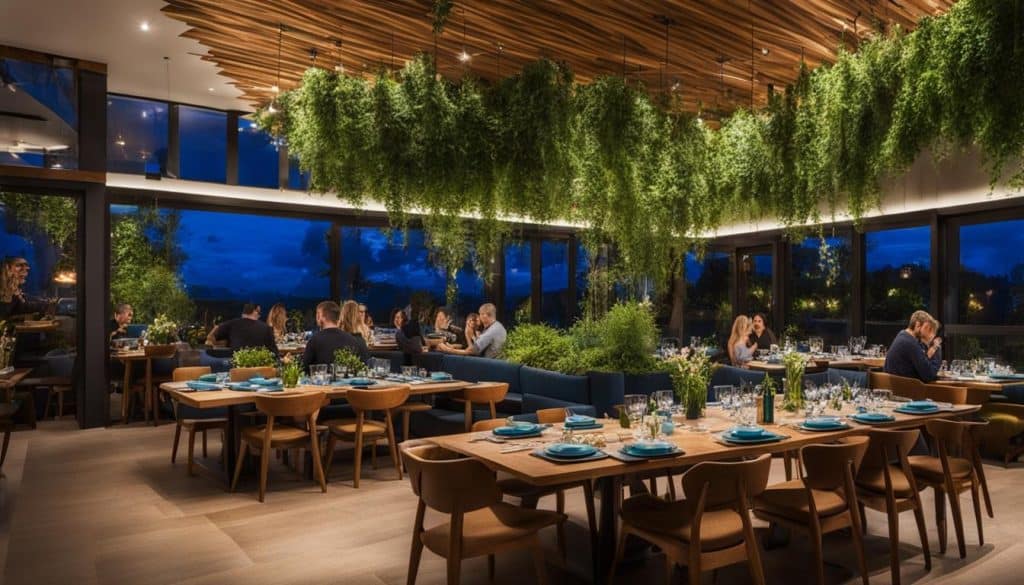
Table: The Influence of Color in Restaurant Design
| Color | Effect |
|---|---|
| Light colors (e.g., white, cream) | Makes food look fresher and more appetizing |
| Dark colors (e.g., black, dark brown) | Creates a more intimate and cozy atmosphere |
| Cool colors (e.g., blue, green) | Associated with freshness, suitable for seafood and salad restaurants |
| Warm colors (e.g., red, orange) | Creates a sense of warmth and excitement, suitable for spicy and bold-flavored dishes |
Blue Plates and Portion Control
When it comes to portion control, the color of our plates may play a significant role. Studies have shown that using blue plates can help reduce food consumption, leading to better portion control and potentially aiding in weight management.
The color blue is believed to have an appetite-suppressing effect. Unlike other colors commonly associated with food, such as yellow and red, blue is not typically found in natural food sources. This lack of association with cravings makes blue an ideal choice for portion control plates.
By serving meals on blue plates, individuals may subconsciously consume less food without feeling deprived. The color blue seems to have a calming effect on our appetite, helping us to eat more mindfully and control portion sizes.
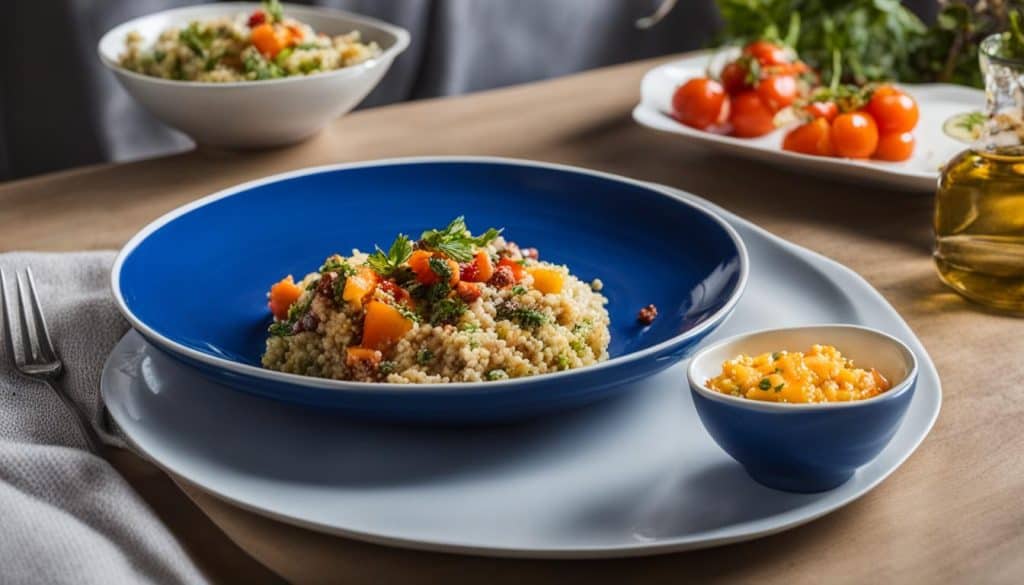
In addition to using blue plates, incorporating blue lights in dining areas has also been found to decrease overall food consumption. The presence of blue, whether in the form of plates or lighting, acts as a visual cue that unconsciously suppresses our appetite.
While blue plates can be a helpful tool for portion control, it’s important to note that individual eating behaviors and preferences vary. They should be used as part of an overall balanced and healthy eating plan for optimal results.
Table: Portion Control with Blue Plates
| Study | Findings |
|---|---|
| Study 1 | Participants who ate from blue plates consumed 20% less food compared to those who ate from other colored plates. |
| Study 2 | People served food in blue bowls ate 30% less than those served in red bowls. |
| Study 3 | Using blue light during meals resulted in participants eating fewer calories compared to meals without blue light. |
The Influence of Visual Cues on Eating Habits
I have always been fascinated by the power of visual cues in shaping our behaviors. When it comes to our eating habits, the color and appearance of food play a significant role in our appetites and enjoyment of a meal. Research has shown that many people judge the taste and quality of food solely based on its visual appeal. As a result, the presentation of food has become an art form, with chefs and food stylists carefully curating dishes to entice and satisfy our senses.
But what about the color of the plate we eat from? Can something as simple as the color of our plates impact how much we eat? It turns out that it can. The choice of plate color can subtly influence our perception of portion sizes and ultimately affect our food consumption. In particular, the color blue has been found to be an appetite suppressant and may contribute to eating less.
The relatively rare presence of blue in nature makes it less appealing to our appetite. When we see blue on our plates, our brains are not triggered to feel hungry as they would be with other colors. This can have a significant impact on the amount of food we consume. So, next time you sit down for a meal, consider using a blue plate to help manage your portion sizes and create a visual cue for healthier eating habits.
Table: The Impact of Plate Color on Food Consumption
| Plate Color | Food Consumption |
|---|---|
| Blue | Reduced |
| Red | Increased |
| Yellow | Increased |
Blue Plates and Weight Loss Hacks
If you’re looking for a simple and effective weight loss hack, consider incorporating blue plates into your dining routine. The color blue has been found to have an appetite-suppressing effect, making it an interesting tool for portion control. By serving your meals on blue plates, you may find yourself eating less without feeling deprived.
Research suggests that blue is not a color commonly found in nature, and our brains are not biologically programmed to associate it with cravings. This may explain why the color blue can help suppress appetite. When we see blue, our brains are less likely to trigger the release of hormones that stimulate hunger.
While more studies are needed to fully understand the impact of blue plates on weight loss, it is clear that the color can play a role in regulating our eating behavior. Incorporating blue plates into your weight loss journey can be a simple and visually pleasing way to support your overall goals.
| Blue Plates and Weight Loss | Benefits |
|---|---|
| Appetite suppression | – Reduced food intake |
| Visual cue for portion control | – Eat smaller portions without feeling deprived |
| Psychological impact | – Avoid triggering hunger responses |
| Easy and affordable | – Simple way to support weight loss goals |
It’s important to remember that blue plates alone are not a miracle solution for weight loss. They should be used in conjunction with a balanced and healthy eating plan. However, incorporating this weight loss hack into your daily routine may help you feel more in control of your portions and make healthier choices overall.
The Role of Color in Food Products
Color plays a crucial role in the presentation and appeal of food products. Manufacturers understand the importance of visually enticing consumers, and one way they achieve this is by carefully selecting the right colors for their products. Food color is often added to offset natural variations caused by exposure to light and air, ensuring that the appearance of the product remains consistent.
When choosing food colors, manufacturers consider not only the visual appeal but also the psychological impact on consumer perception. Certain colors are associated with specific flavors or qualities, and consumers may subconsciously make food choices based on color alone. For example, vibrant reds can evoke thoughts of sweetness, while greens and blues may suggest freshness.
By strategically using color in food products, manufacturers can create a visual experience that aligns with their brand and product goals. The right color can enhance the perceived taste, texture, and overall quality of the food, making it more enticing and appealing to consumers.
| Color | Associated Perception |
|---|---|
| Red | Sweetness, Richness |
| Yellow | Warmth, Energy |
| Green | Freshness, Healthiness |
| Blue | Coolness, Calmness |
Color in food products enhances the appeal and visual experience, influencing the perception of taste, texture, and overall quality.
Food color is not only used to enhance the appearance of individual products but also to create visual appeal in packaging and marketing materials. Eye-catching colors can attract consumers’ attention and make the product stand out on store shelves. Additionally, color can be used to convey specific messages or associations. For example, earthy tones may be used to emphasize organic or natural ingredients, while bold and vibrant colors can signify indulgence and excitement.
Manufacturers employ color research and analysis to ensure their products are visually appealing and enticing to consumers. By understanding the role of color in food products, they can create a more engaging and memorable consumer experience.
The Importance of Color in Food Marketing
Color plays a crucial role in food marketing, influencing the way consumers perceive and interact with products. When it comes to food appearance, the right choice of color can make a significant impact on consumer perception and overall product success. Research shows that color can influence the perception of taste, texture, and quality, making it an essential element in the marketing strategy of food brands.
In a study conducted by the University of British Columbia, researchers found that the color red increased the perceived sweetness of a drink, while the color green enhanced the perception of sourness. These findings highlight how color can create specific expectations and influence consumer preferences. By carefully selecting the appropriate colors to represent their products, food marketers can create a visual experience that aligns with their brand and appeals to their target audience.
“The right choice of color can make a significant impact on consumer perception and overall product success.”
The use of color in food marketing goes beyond the product itself. The packaging, labeling, and advertisements all rely on color to capture consumers’ attention and convey the desired message. For example, bright and vibrant colors are often used to signify freshness and natural ingredients, while subtle pastel tones may suggest sophistication and elegance. By understanding the psychological associations that different colors evoke, food marketers can strategically leverage color to enhance brand recognition and attract consumers.
The Power of Visual Cues
Color is just one aspect of visual cues that influence consumer perception. Other visual elements such as graphics, typography, and imagery also contribute to the overall impact. When these elements are used harmoniously with color, they create a cohesive and visually appealing presentation that resonates with consumers on both a conscious and subconscious level.
Ultimately, color is a powerful tool in food marketing, and its careful selection can significantly influence consumer perception and purchasing decisions. By understanding the psychology behind color and leveraging it effectively in their marketing strategies, food brands can create a lasting impression and stand out in a highly competitive market.
Conclusion
In conclusion, the color blue has been found to have an appetite-suppressing effect, making blue plates a potential tool for portion control. Research suggests that our brains are not naturally inclined to feel hungry when we see blue-colored foods, as blue is not commonly found in nature. This suppression of appetite can contribute to eating less when using blue plates.
However, it is important to note that individual eating behaviors and preferences vary. While blue plates may be helpful in reducing food consumption, they are not a miracle solution for weight loss. It is essential to adopt a balanced and healthy eating plan for long-term results.
Color, especially when it comes to the appearance of food, has a significant influence on our eating behavior. Eighty percent of our food impressions are made through our eyesight. The choice of color in food marketing and restaurant design can enhance food attractiveness and appeal to consumers. Blue plates, in particular, may help in appetite control by minimizing the instinctive appeal of food.
Overall, while blue plates may not be the sole answer to weight loss, they offer a potential aid in portion control. By understanding the influence of color on our eating behavior and incorporating strategies like blue plates, we can make conscious choices to support a healthier lifestyle.
FAQ
Does using a blue plate really make you eat less?
Research suggests that the color blue has an appetite-suppressing effect, making individuals consume less food.
How does the color blue influence our eating behavior?
Blue is a color that is not commonly found in nature, which makes it less appealing to our appetite and can suppress hunger.
What is the role of color in restaurant design and food appearance?
Colors and lighting in restaurants are carefully chosen to create an appetizing atmosphere and make food look fresher and more appealing.
Can using blue plates help with portion control?
Yes, studies suggest that serving meals on blue plates can reduce food intake and contribute to portion control.
How do visual cues, such as plate color, influence our eating habits?
Visual cues play a significant role in our eating habits, and the color and appearance of food can impact our appetites and enjoyment of a meal.
Are blue plates a weight loss hack?
While research shows that blue plates may help with appetite suppression and portion control, they are not a miracle solution for weight loss.
What is the role of color in food products?
Color is added to food products to enhance their appearance, offset natural variations, and make them visually appealing to consumers.
How important is color in food marketing?
Color plays a crucial role in food marketing as it can significantly influence the perception of taste, texture, and overall quality of a product.
What is the overall conclusion about blue plates and eating behavior?
Blue plates appear to have an appetite-suppressing effect, but individual eating behaviors and preferences may vary. It is advisable to adopt a balanced and healthy eating plan for long-term results.
Source Links
- http://www.people.vcu.edu/~djbromle/color-theory/color01/Relationship-Between-Food-and-Color-Kalim-Hussaini.html
- https://www.popsugar.com/fitness/weight-loss-blue-plates-39331277
- https://timesofindia.com/life-style/health-fitness/weight-loss/weight-loss-eating-from-blue-plates-and-other-bizarre-diet-tricks/photostory/91670269.cms